
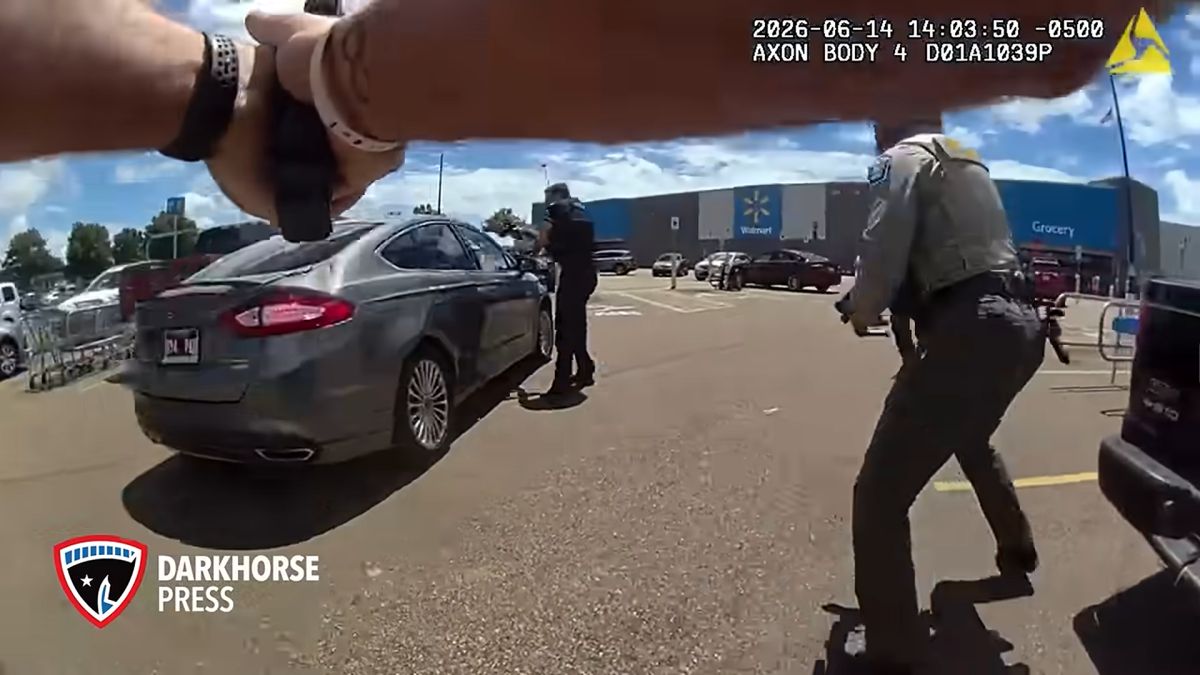


The recently leaked bodycam video in Senatobia, Mississippi, is bringing the police killing of one-year-old Kohen Wiley to the forefront of the police brutality conversation. Kohen was killed after police pursued his mother and another woman out of a Walmart after they were accused of shoplifting. However, neither woman was charged with a crime, and no evidence has been presented proving they stole anything from the store. Instead, according to Kohen’s mother, the box of diapers they were accused of stealing had previously been paid for.
Many have noted that the leaked videos (videos below), which came after a grand jury failed to indict the officer who fired his weapon into the car, were selective and did not include his bodycam footage. Additionally, the investigation focused solely on the car’s movements and not the initial call or the police-led escalation that resulted in Kohen’s death. According to Mississippi’s Department of Public Safety press secretary, the department will release all videos in the coming days after Kohen’s family reviews them first.
While state authorities have not officially identified the shooter, Hunter Foster is the only officer named in an incident report and the only officer placed on administrative leave. Foster has a long and problematic history in law enforcement. Just days before the shooting, Foster made racist remarks to a fellow police officer who is Black, leading to that officer resigning, partly due to how the department handled his complaint. Previously, Foster was named in two lawsuits, one after allegedly assaulting a woman and breaking her jaw, and the other for exaggerating the risks a vehicle posed to officers in 2019.
The Sanitonia police department has also been the subject of much scrutiny since the shooting. Last year, the former police chief was fired after complaints of discriminatory behavior were filed against him, including the arrest of a 10-year-old for allegedly urinating in public. Later, the chief who replaced him regularly used racial slurs in text messages. In a series of 10 text messages, Chief Harold Vanderford used racial slurs to refer to Black people at least a dozen times.
This case is again raising many questions about racism in policing, police brutality linked to unnecessary escalations, police shooting into moving vehicles, and overly aggressive reactions to otherwise benign accusations of crimes. It’s no secret that policing in the U.S. continues on a harrowing path, but the statistics should be alarming to ordinary people and can not continue to be ignored, especially when considering the escalation in aggressive policing since President Donald Trump took office for his second term in 2025.
Racism in policing is nothing new. However, failing to address it has created a system where not just rank-and-file police officers are abusing their authority, but the leadership in various law enforcement agencies serves to provide cover for police misconduct. This is especially prevalent when addressing police gangs, hate group recruitment efforts, and officers making hateful and racist comments. But it’s not limited to law enforcement agencies. Various groups and organizations, such as police unions, promote such beliefs.
Similarly, we see many people, from elected officials to police union bosses, often defend police misconduct without weighing all the facts. They have turned a tangible problem into a culture war, thus undermining any meaningful discussions or policy proposals. This is no more obvious than when we see police aggressively respond to benign situations when they don’t like the way a person talks or conducts themselves. The “us versus them” mentality in policing is such that officers believe they can order people to act a certain way. When they don’t, violence follows.
This often leads law enforcement’s sycophantic defenders to defend the indefensible, such as shooting into a moving car and killing a child. A recent case in Newark, New Jersey highlights the dangers posed to the public when the driver of a moving vehicle is shot and killed. As seen in a video that was recently released, after officers shot a suspected car thief, the vehicle he was driving sped across an intersection, jumped onto a sidewalk, and struck two parked cars.
Of the more than 1200 people killed by police in 2025, at least 760 people were killed during traffic stops, police responses to mental health crises, or situations where the person was not reportedly threatening anyone with a gun, making up 67% of all police killings; 605 people were killed by police responding to calls for non-violent offenses or no reported crime; 116 were killed by police responding to reports of erratic behavior or mental health crises; and 38 people were killed when police shot into a moving vehicle
While the total number of killings by police declined in 2025 (1201) compared to record highs reported in 2024 (1,271), they remained higher than pre-pandemic levels, showing a continuous increase throughout the last two decades. Police have killed at least 1,014 people so far in 2026, including 15 Immigration and Customs Enforcement (ICE) killings, according to Mapping Police Violence data. As of 2024, U.S. law enforcement officers are responsible for at least 7% of all homicides in the United States.
As reactionaries defend these behaviors without scrutiny, police killings continue to plague U.S. society, and little to nothing is being done to address the problem. Meanwhile, fewer than 3% of killings by police result in charges against officers – a statistic that will almost certainly grow more alarming as violence by local, state, and federal law enforcement agencies continues to escalate, thanks in large part to a growingly fascist society and the current administration in the White House fueling the violence.
Leaked Videos (Graphic Content)
Discover more from The Antagonist Magazine
Subscribe to get the latest posts sent to your email.